A Seven-Year Revolution of the Mind.
The Emergence of Awe Curriculum develops the thinkers, leaders and imaginations of tomorrow that the Intelligence Age demands of them. From Year 7 to Year 13. One hour a week. One transformative journey to take with them for the rest of their lives.
Explore the Curriculum
Seven years. Five modules per year. Six lessons per module. One hour a week.
Bring EoA to Your School
In a world where every applicant has grades, the EoA Diploma offers something different.
Read the Book
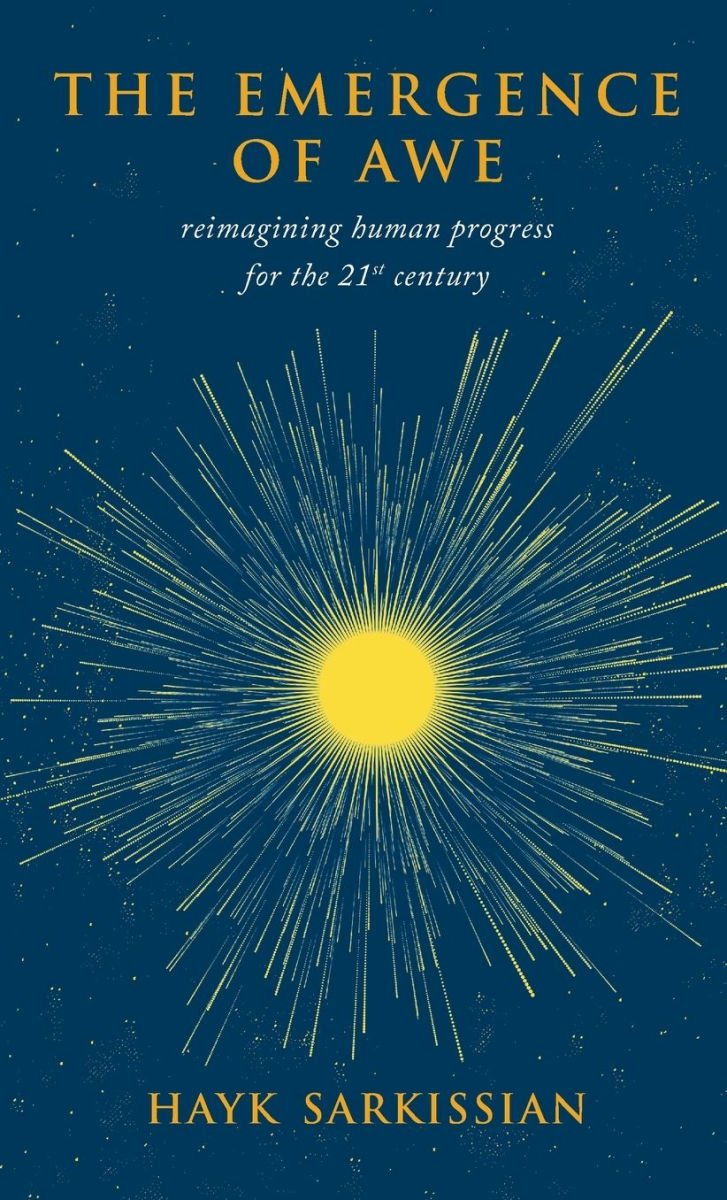
The Emergence of Awe: Reimagining Human Progress for the 21st Century by Hayk Sarkissian.
"We cannot solve our problems with the same kind of thinking we used when we created them."
— Albert Einstein
Years
Modules
Lessons
Core Terms
Diploma
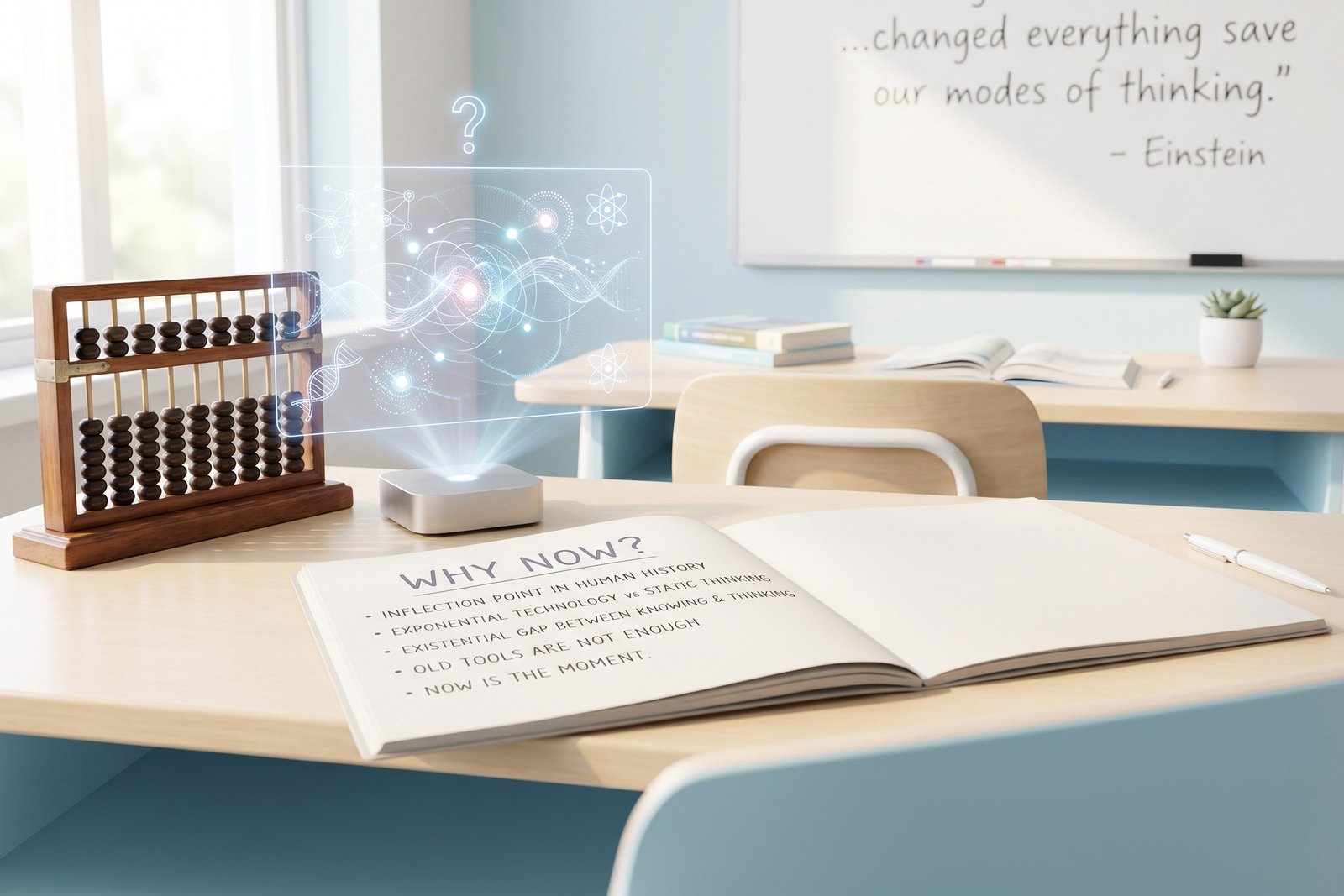
Why Now
Now is the moment. Not because the curriculum is a nice addition to school life, but because the gap between what our children know and how they think is becoming existential. The Emergence of Awe Curriculum exists to close that gap...
New Modes of Thinking
The Emergence of Awe Curriculum is born from a single conviction: the world needs a new kind of education — one that develops creators and critical thinkers.
Our technologies are advancing exponentially, but our institutions, our education systems, and our modes of thinking remain rooted in the past. We are innovating technological power at an exponential pace, but our minds remain shackled to the modes of thinking of previous generations.

Purpose
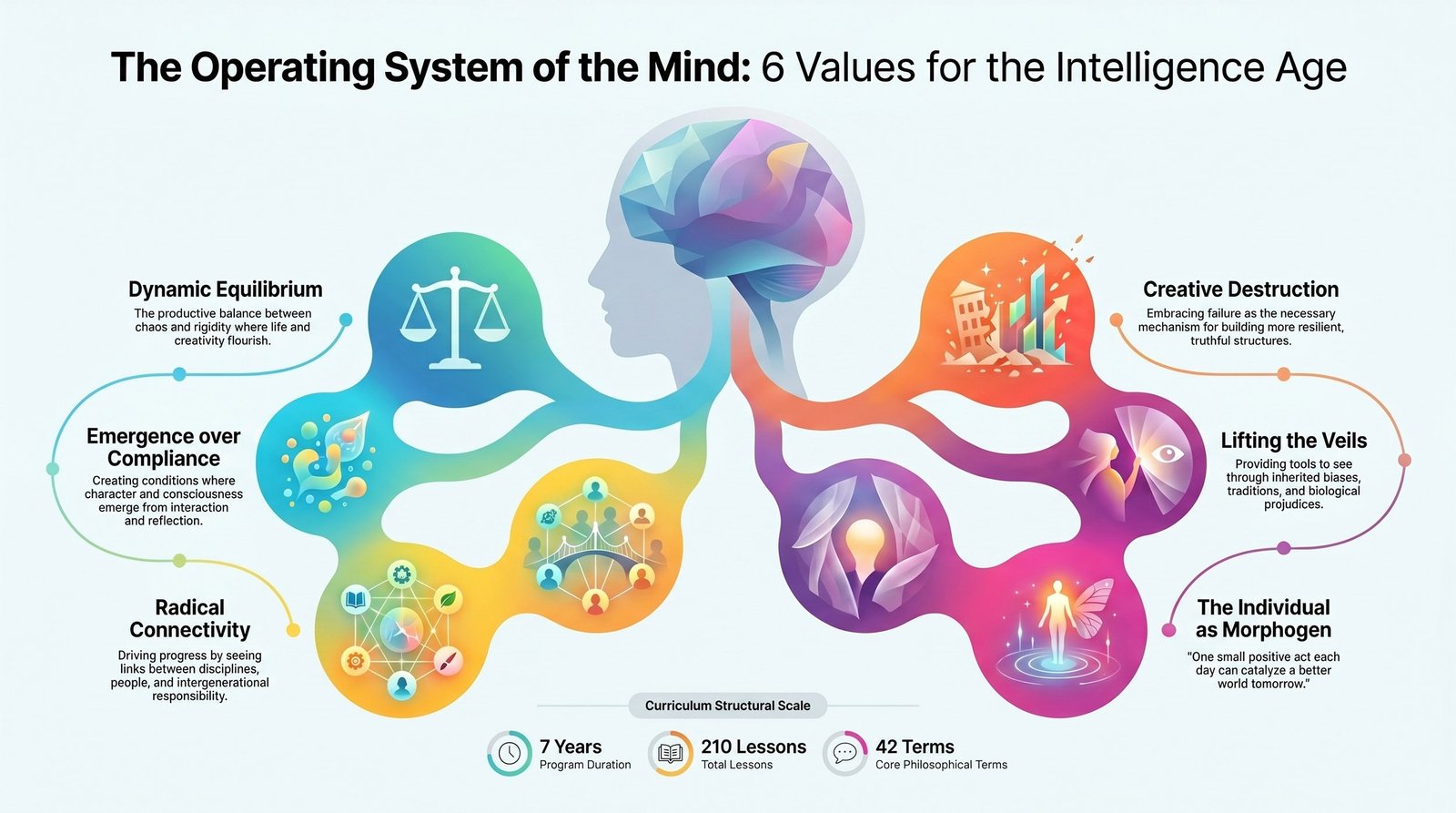
Our purpose is to develop young people who function as positive morphogens — agents of self-organising change who set the conditions for emergence in their communities and beyond.
Values
Our values are drawn from the universal principles explored in The Emergence of Awe. They are not slogans. They are the operating system of the curriculum.
The Curriculum
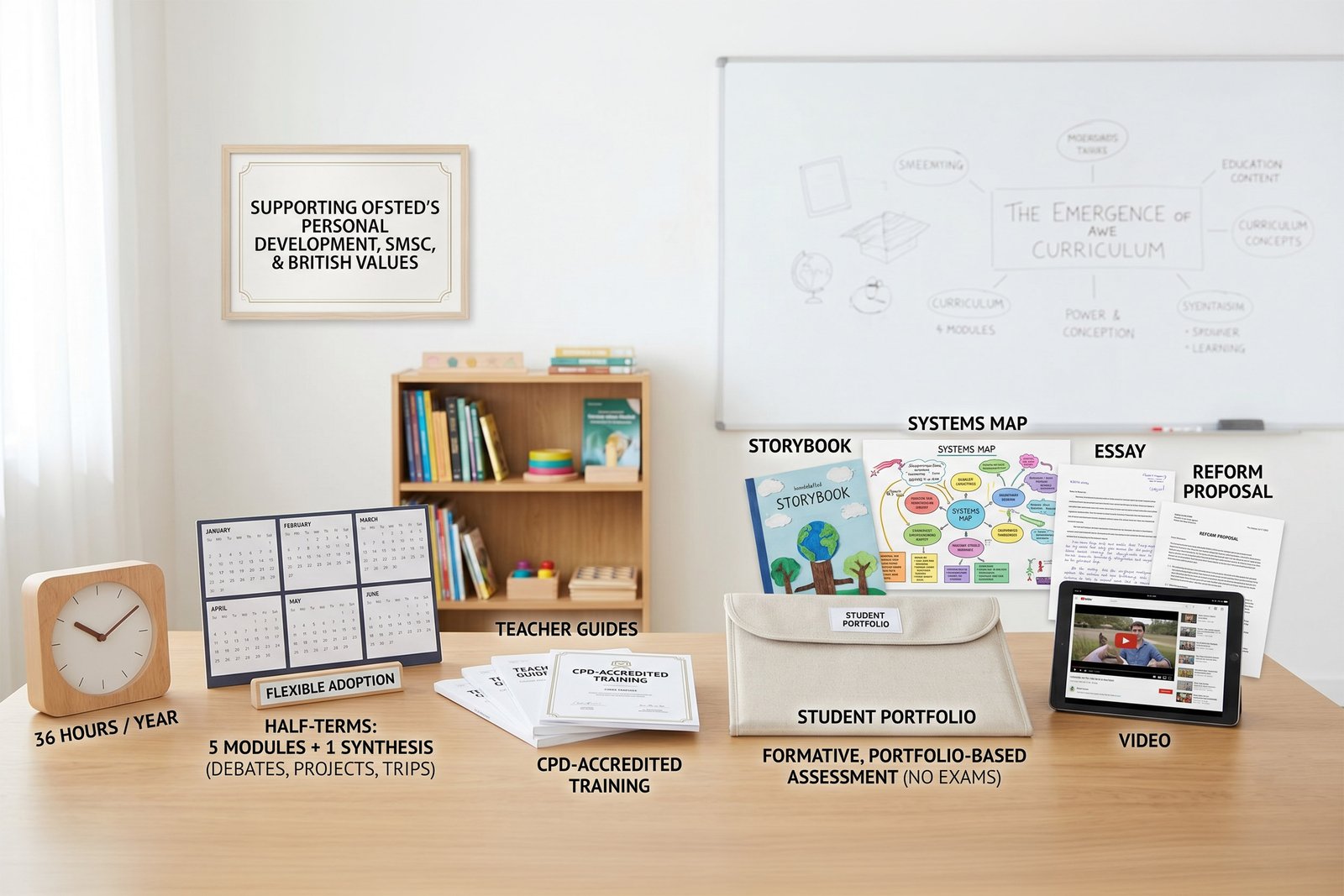
Seven years. Five modules per year. Six lessons per module. The Emergence of Awe Curriculum is designed to sit alongside the academic timetable and be flexible to meet the needs of the school.
Year 7
Foundations of Awe
Phase: Concrete-Relational
Year Question: ‘What makes something awe-inspiring?’
YEAR 8
Navigating Time and Energy
Phase: Concrete-Relational
Year Question: ‘How do I experience and use my time, energy, and attention?’
YEAR 9
The Edge of Chaos
Phase: Abstract Thinking
Year Question: ‘What happens when things break down — and what can emerge?’
YEAR 10
Veils of Perception
Phase: Abstract Thinking
Year Question: ‘What shapes how I see the world — and which veils can I begin to lift?’
Year 11
Transformation and Identity
Phase: Integrative Thinking
Year Question: ‘Who am I becoming — and what must I let go of for something new to emerge?’
YEAR 12
Power, Meaning and Truth
Phase: Evaluative / Epistemic
Year Question: ‘How do I know what I know — and what responsibility does knowing create?’
YEAR 13
The Emergence of Leadership
Phase: Applied Ethical Judgement
Year Question: ‘What is my morphogen to the world?’
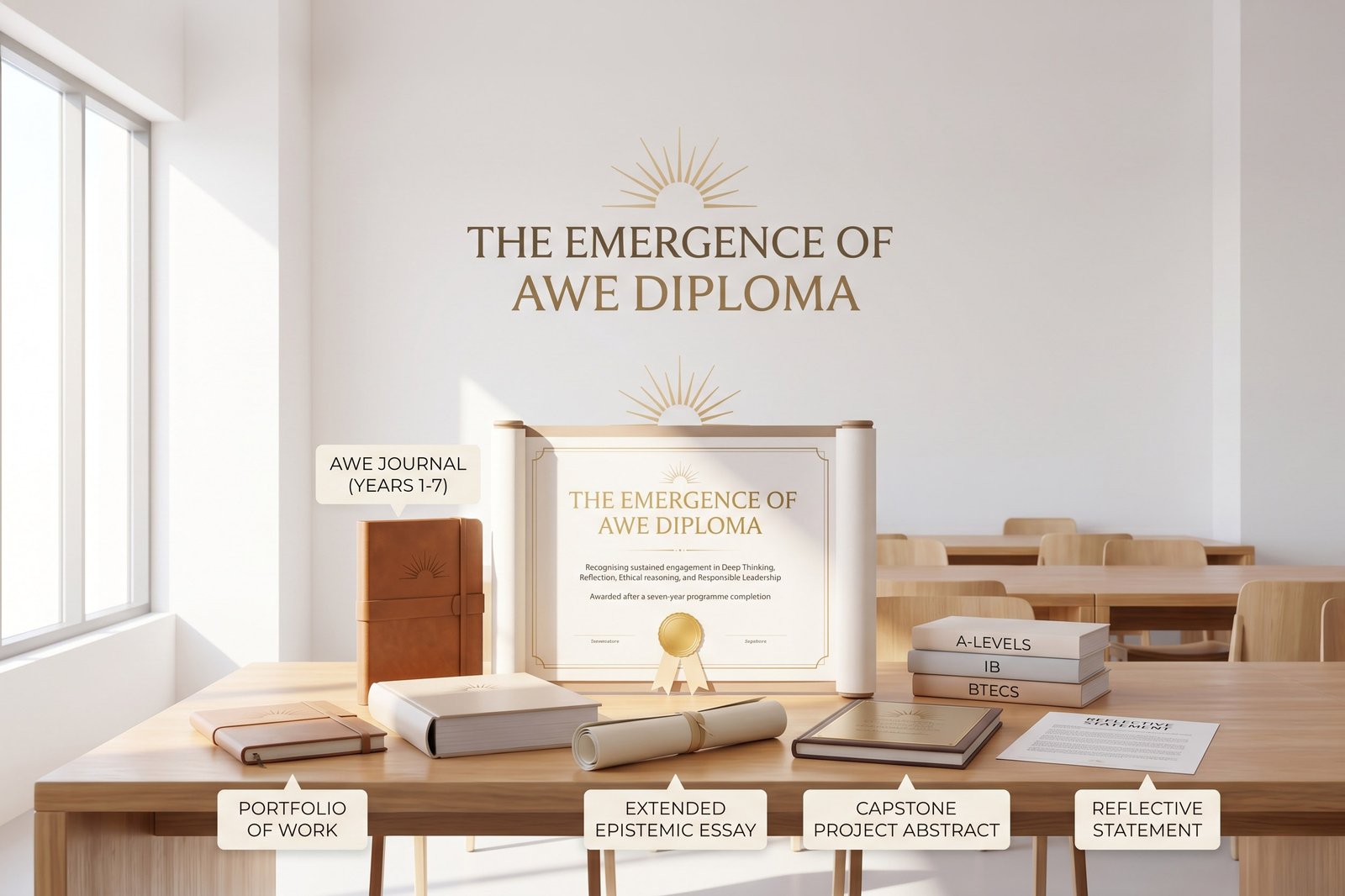
The EoA Diploma
In a world where every applicant has grades, the EoA Diploma offers something different: evidence that a young person can think deeply, reflect honestly, engage ethically, and lead with moral imagination.
For Schools
The Emergence of Awe Curriculum occupies thirty six hours per year. The standard structure of each academic year is divided into six half-terms: five are used for the curriculum (one module per half-term, six lessons each), and the sixth is reserved for synthesis activities — year-group debates, cross-disciplinary projects, exhibitions, and experiential trips. However, the program is designed to be flexible to fit the needs and contextual nature of each school.
Get in Touch
We are currently partnering with a small number of pilot schools across the independent and state sectors. If you are a headteacher, head of department, or senior leader interested in bringing The Emergence of Awe Curriculum to your school, we would welcome a conversation.
The Book
The Emergence of Awe: Reimagining Human Progress for the 21st Century by Hayk Sarkissian is the philosophical foundation of everything we do.
The book begins with its conclusion and ends with its introduction, reflecting its core insight: endings are beginnings, and growth is cyclical. It has been described as a manifesto for the Intelligence Age — a call to arms for anyone who believes that the way we think matters as much as the technologies we build.